
Montreal Family Dentistry
Dental services in downtown Montreal
Whether you need preventive care, help with a damaged tooth or advice about your smile, Montreal Family Dentistry offers a range of dental services for children, adults and seniors. Our clinic is located on Saint-Catherine Street West, near Guy–Concordia metro.
Your dentist will assess your oral health, explain the options and discuss a treatment plan suited to your needs. Explore our services below to prepare for that conversation.
Request an Appointment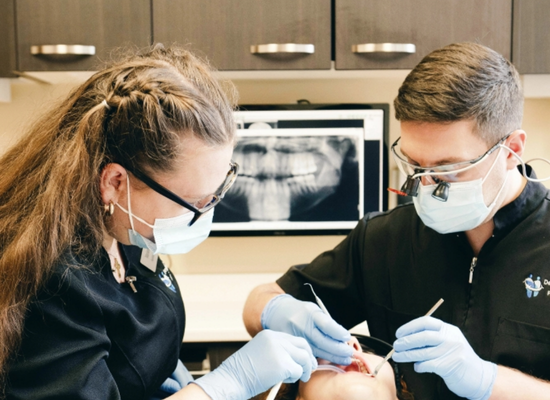
General dentistry and preventive care
Regular dental care helps us monitor your teeth and gums and discuss changes in your oral health. General dentistry also includes care for cavities, gum concerns and other problems that may affect comfort or function.
Dental exams and cleanings
A dental exam gives your dentist an opportunity to assess your teeth, gums and existing restorations. Professional cleaning removes plaque and tartar, while your visit is also a chance to discuss brushing, flossing and a follow-up schedule suited to your needs.
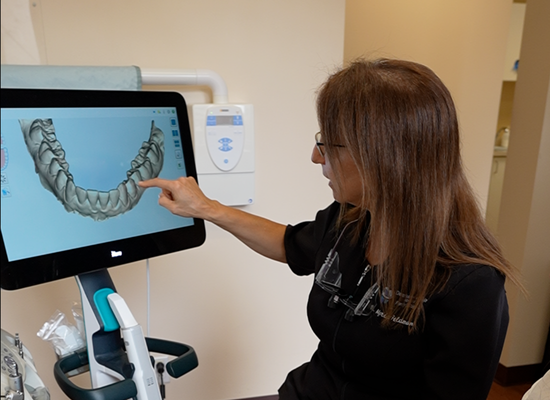
Digital X-rays and iTero scanning
Imaging can provide information that is not visible during a visual examination alone. When appropriate, digital X-rays and intraoral scans support assessment and treatment planning. Your dentist determines which images or scans are relevant to your care.
Intraoral camera
Close-up images can help you see the areas your dentist is discussing. An intraoral camera supports clear explanations of findings and helps document areas being monitored or treated.
Root canal treatment
When the tissue inside a tooth becomes inflamed or infected, root canal treatment may be considered to help preserve the tooth. Your dentist assesses its condition and explains whether this approach, another treatment or a referral is appropriate.
Gum and periodontal care
Healthy gums are an important part of oral health. We assess gum concerns and discuss care based on the findings. The recommended approach depends on the condition of your gums and the tissues supporting your teeth.
Custom night guards
Grinding or clenching can contribute to tooth wear. A custom night guard may be recommended to help protect your teeth when appropriate. An examination helps determine whether an appliance fits your needs; it is not a guaranteed cure for grinding.
Children's dentistry
Children's dental needs change as they grow. Our team provides preventive and restorative care adapted to their stage of development, while helping families understand recommended care and daily oral hygiene.
Urgent dental care
If you have unexpected dental pain, swelling or a broken tooth, call 514-935-1953 to ask about an appointment. We assess urgent dental concerns subject to availability. Calling allows the team to discuss the next step; submitting an online request does not confirm an appointment.
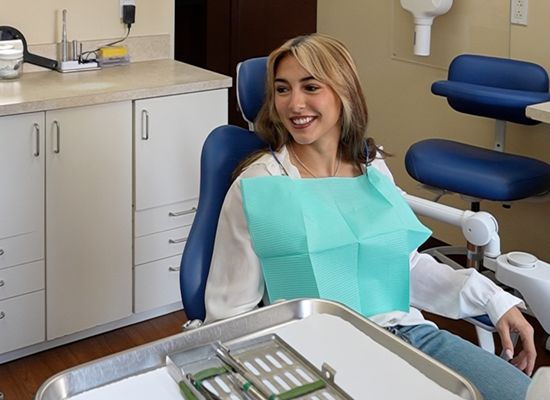
Cosmetic dentistry and your smile
Cosmetic dental care considers the appearance of your teeth alongside their health and function. If you would like to discuss tooth colour, shape or the overall appearance of your smile, your dentist can explain appropriate options and their limitations.
Professional teeth whitening
Professional whitening may be an option for lightening natural tooth colour. Before recommending care, your dentist considers your oral health, existing restorations and goals. Suitability and results vary from person to person.
Tooth-coloured fillings
Composite fillings can repair cavities or replace selected existing restorations while blending with the colour of your teeth. The choice of restoration depends on the tooth's condition, the area being repaired and your treatment needs.
Porcelain veneers
Veneers are thin restorations placed on the front of selected teeth to change aspects of their appearance. An assessment helps determine whether veneers are appropriate and provides an opportunity to discuss alternatives, treatment steps and ongoing care.
Personalized smile planning
Start with a conversation about what you would like to change. We review your oral health and discuss realistic options, priorities and estimated fees before you decide whether to proceed.
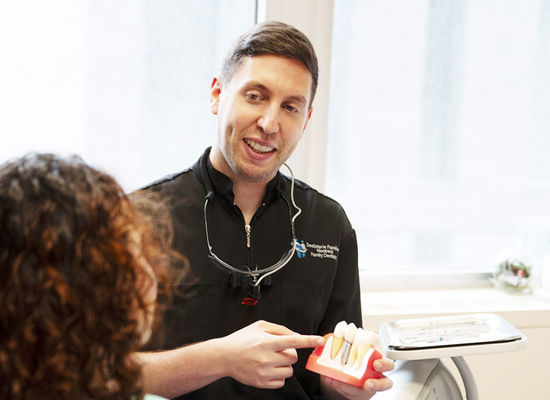
Restorative dentistry for damaged or missing teeth
A damaged or missing tooth can affect how you chew and how your teeth work together. Restorative dentistry offers different approaches to repairing teeth or replacing them. Your dentist considers the remaining tooth structure, surrounding teeth and maintenance needs when discussing options.
Dental crowns
A crown covers a tooth that needs additional protection or restoration. It may be considered for a weakened, fractured or extensively restored tooth. Your dentist explains the proposed approach and how the crown would fit into your overall care.
Dental bridges
A bridge replaces one or more missing teeth using support from neighbouring teeth or implants. We assess the space and supporting structures to determine whether a bridge is suitable and discuss how to care for it.
Implant-supported restorations
Dental implants can support crowns, bridges or other replacement teeth. Planning considers the implant support and the restoration together, including function, appearance and cleaning requirements. An assessment is needed to discuss appropriate options.
Full and partial dentures
Removable dentures replace some or all missing teeth. Your dentist can discuss the type of denture suited to your situation, what to expect during the process and the importance of follow-up and maintenance.
Dental surgery and implant care
Surgical recommendations depend on an assessment of your oral health and the area being treated. We discuss the reason for a proposed procedure, relevant alternatives and the stages of care before proceeding.
Dental implants
A dental implant is placed in the jaw to support replacement teeth. Whether it is appropriate depends on factors such as oral health and the supporting bone. Your dentist can explain the assessment, treatment stages and ongoing maintenance involved.
Wisdom tooth assessment and removal
Wisdom teeth do not always need to be removed. An examination helps determine whether they are causing a problem or whether extraction is recommended. If removal is appropriate, your dentist explains the proposed procedure and follow-up care.
Periodontal surgery
Some gum or supporting-tissue conditions may require a surgical approach. Recommendations are based on clinical findings and the response to other care where relevant. Your dentist explains the purpose and limitations of the proposed treatment.
Gum and bone grafting
Grafting may be considered when additional gum tissue or bone is needed in a particular area. The decision depends on the condition being treated and the broader treatment plan. An assessment is necessary before discussing suitability.
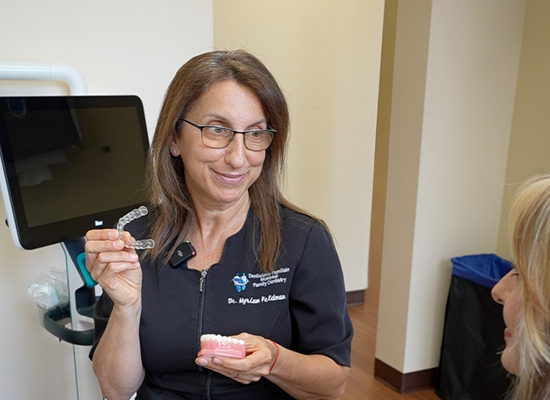
Invisalign® clear aligners in Montreal
If you are considering improving the alignment of your teeth, clear aligners may be one option. Invisalign treatment uses a series of removable aligners planned for an individual patient. Your dentist first evaluates your teeth, bite and oral health.
How clear aligner treatment is planned
Treatment planning considers the tooth movements required and whether aligners are suitable. Your dentist explains the proposed approach, the importance of following wear instructions and the follow-up involved. Treatment length and results vary with the individual case.
An assessment before you decide
An Invisalign assessment is an opportunity to discuss your goals, suitability and estimated fees. Ask about the treatment commitment, alternatives and care after alignment. An appointment does not commit you to treatment.
What to expect from your dental treatment plan
1. Discuss your concerns
Tell us what brings you in, what has changed and what you would like to understand about your oral health.
2. Assess your oral health
Your dentist completes an examination and recommends relevant imaging or additional assessment when needed.
3. Review your options
We explain recommended care, priorities, alternatives, timing and estimated fees so you can ask questions before deciding.
4. Proceed with agreed care
Treatment follows the plan discussed with you. You can continue to ask questions throughout your care.
5. Plan follow-up
We discuss appropriate follow-up and maintenance based on the treatment provided and your oral health needs.
This information is general and does not replace a dental examination. Treatment recommendations depend on an individual assessment.
Discuss your dental care with our team
For questions about our dental services in downtown Montreal, call 514-935-1953 or request an appointment. We can help you arrange a visit to discuss your needs.